Amazon Basics
Amazon Basics 48-Pack AA Alkaline High-Performance Batteries, 1.5 Volt, 10-Year Shelf Life
Amazon Basics 48-Pack AA Alkaline High-Performance Batteries, 1.5 Volt, 10-Year Shelf Life
Couldn't load pickup availability
Forty-eight AA alkaline cells, each rated at 1.5 volts, arrive in one Amazon Basics value pack. The quantity is the point: a single box covers a household's rotation of battery swaps for a long stretch, with spares left over rather than a last-minute run to the shop when something goes quiet.
These cells carry a 10-year shelf life and are built to resist leaking while stored, so a pack set aside in a drawer or an emergency kit stays usable years later. They ship in Certified Frustration-Free Packaging, which opens without tools and holds the extras neatly once the first few are taken out.
- Suited to game controllers, remote-operated toys, flashlights, digital cameras, wall clocks and similar everyday electronics.
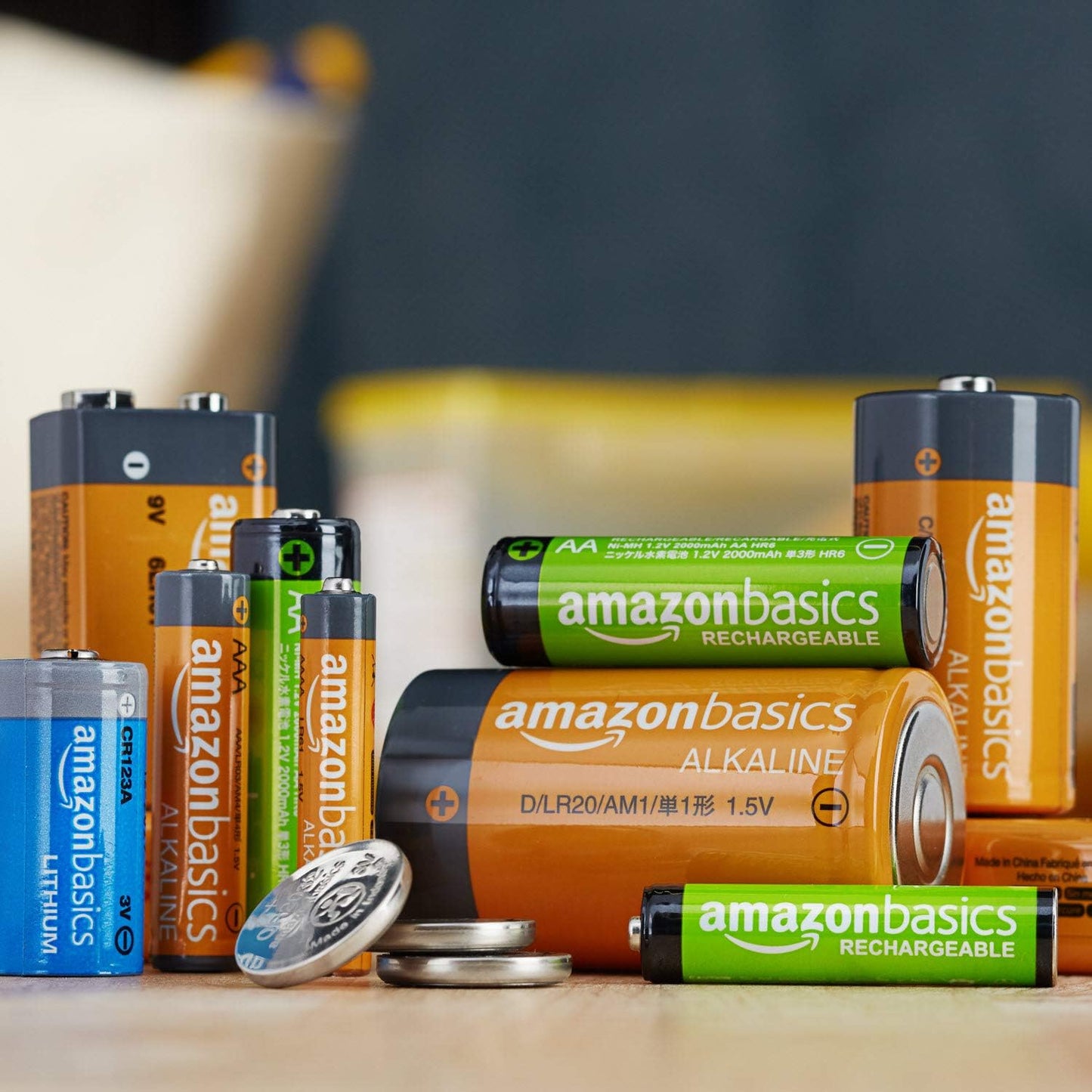
These are single-use cells and cannot be recharged. Once depleted they are replaced rather than refilled. Amazon Basics offers a separate rechargeable line for devices where repeated charging is preferred.
When loading cells into a device, check that the positive and negative ends align with the markings inside the battery compartment before closing the cover. Mixing old and new cells in a multi-battery device shortens overall runtime because the older cell drains first and can hold back the fresher ones. For devices that sit unused for weeks or months at a time, removing the batteries entirely prevents any slow discharge and removes the small risk of corrosion affecting the contacts. If a device stops responding before you expect it to, try cleaning the contact points with a dry cloth before swapping in fresh cells, since surface residue can interrupt the connection even when the batteries still hold a charge.
A bulk pack of this size makes the most sense for households that run several battery-dependent devices at the same time, or for anyone maintaining emergency supplies, since having a consistent brand and chemistry on hand simplifies rotation. When comparing AA options, the key practical differences are alkaline versus lithium chemistry and primary versus rechargeable format. Alkaline cells like these cost less per unit and work well across typical household draws, while lithium primary cells handle extreme cold better and tend to last longer in high-drain devices. If most of your use falls in the middle range, everyday remotes and clocks and flashlights, alkaline AA batteries remain the straightforward choice.
Share