ARRIS
ARRIS Surfboard G34 DOCSIS 3.1 Gigabit Cable Modem & Wi-Fi 6 Router (AX3000) , Approved for Comcast Xfinity, Cox, Spectrum & More , Four 1 Gbps Ports , 1 Gbps Max Internet Speeds
ARRIS Surfboard G34 DOCSIS 3.1 Gigabit Cable Modem & Wi-Fi 6 Router (AX3000) , Approved for Comcast Xfinity, Cox, Spectrum & More , Four 1 Gbps Ports , 1 Gbps Max Internet Speeds
Couldn't load pickup availability
The ARRIS SURFboard G34 pairs a plastic housing with metal internal components in a single upright unit that combines a DOCSIS 3.1 cable modem and a Wi-Fi 6 router. It ships with a power supply, a quick-start guide, and a 2-year limited warranty card from ARRIS.
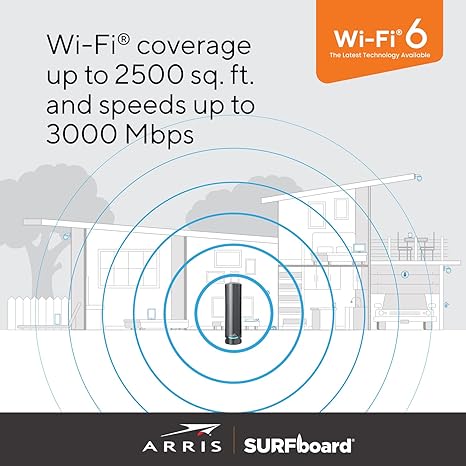
In regular use, the modem handles cable internet plans rated up to 1 Gbps and is approved for providers including Xfinity, Cox, and Spectrum. Dual-concurrent AX3000 Wi-Fi reaches speeds of up to 3 Gbps, and four 1-Gigabit ethernet ports cover wired devices. Setup runs through the SURFboard Central app, which also handles network monitoring and parental controls such as time limits. There is no MoCA support and no telephone port. Live chat and phone support are available from 8am to 1am EST.
- Dimensions: 10 x 3 x 8 inches; weight: 2 pounds. Model number G34. Owning the unit replaces monthly modem rental fees, which can reach $168 per year depending on the provider.
When placing the G34, keep in mind that its upright form factor requires vertical clearance rather than horizontal shelf space, so a ventilated spot on a desk or open shelf works better than a closed cabinet where heat can build up. The unit handles a single cable line in and manages both modem and routing functions from there, which means one fewer device to power and one fewer set of cables to manage compared to running a separate modem and router. That consolidation also means there is only one device to reboot if the connection drops, which simplifies basic troubleshooting for people who prefer not to manage multiple pieces of networking hardware.
This product suits renters or homeowners on a single cable provider who want to stop paying rental fees without taking on the complexity of a multi-device setup. Because it is locked to one cable input rather than supporting multiple WAN types, it is not a fit for households using fiber or DSL. When comparing similar combo units, the absence of a telephone port is worth noting for anyone still using a cable-based home phone line, since a separate voice adapter would be needed in that case.
Share