Pipishell
Full Motion TV Monitor Wall Mount Bracket Articulating Arms Swivels Tilts Extension Rotation for Most 13-42 Inch LED LCD Flat Curved Screen TVs & Monitors, Max VESA 200x200mm up to 44lbs by Pipishell
Full Motion TV Monitor Wall Mount Bracket Articulating Arms Swivels Tilts Extension Rotation for Most 13-42 Inch LED LCD Flat Curved Screen TVs & Monitors, Max VESA 200x200mm up to 44lbs by Pipishell
Couldn't load pickup availability
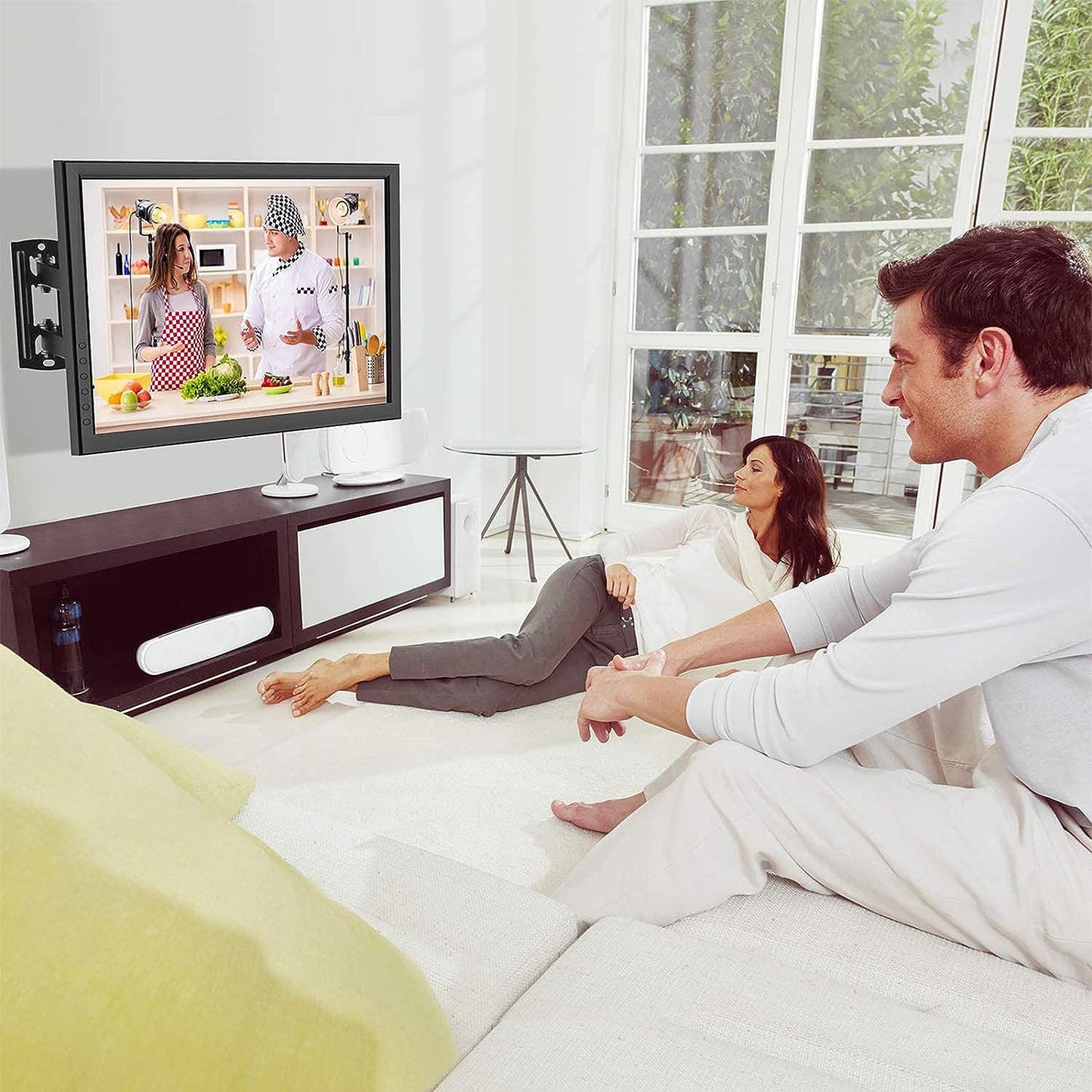
The Pipishell PISF1 is a full motion wall mount bracket built for flat and curved screens between 13 and 42 inches, including monitors sized 13, 17, 19, 21, 24, 27, 32, 34 and 35 inches. Articulating arms let the screen tilt, swivel and rotate, so the display can sit close to the wall or reach out over a desk or seating area. The steel construction and removable plate mean one person can handle the fitting, using a single stud along with the included hardware and instructions.
- Fits screens up to 44 lbs, with VESA hole patterns from 75x75mm to 200x200mm.
- Extends to 14.59 inches and folds back to 2.7 inches from the wall.
- Tilts +9 degrees to -11 degrees, swivels up to 90 degrees left or right, rotates 360 degrees for landscape or portrait.
- Black alloy steel, 3.04 pounds, measuring 9.61 x 6.22 x 2.4 inches.
When choosing a full motion mount, the folded depth matters as much as the maximum extension. A 2.7 inch wall clearance when folded means the screen sits nearly flush when not in use, which works well in bedrooms or offices where a prominent profile would feel intrusive. The 14.59 inch extension is enough to pull a screen well clear of a shelf or swing it around a corner, but buyers who need more than about a foot of reach should measure the intended space first. The 360 degree rotation is particularly useful for monitors used in portrait mode for coding, document editing or vertical video review, and switching between orientations takes only a moment once the mount is installed.
Installing into a single stud rather than two simplifies placement considerably, since stud spacing does not dictate where the screen ends up on the wall. Before mounting, it is worth confirming the VESA pattern on the back of the screen by measuring the bolt hole spacing directly rather than relying on the manufacturer spec sheet, as some curved screens use non-standard arrangements. The removable plate allows the bracket body to be fixed to the wall first and the screen attached separately, which makes solo installation practical even with heavier displays approaching the 44 pound limit.
Share