STA-BIL
STA-BIL Storage Fuel Stabilizer - Keeps Fuel Fresh for 24 Months - Prevents Corrosion - Gasoline Treatment that Protects Fuel System - Fuel Saver - Treats 80 Gallons - 32 Fl. Oz. (22287)
STA-BIL Storage Fuel Stabilizer - Keeps Fuel Fresh for 24 Months - Prevents Corrosion - Gasoline Treatment that Protects Fuel System - Fuel Saver - Treats 80 Gallons - 32 Fl. Oz. (22287)
Couldn't load pickup availability
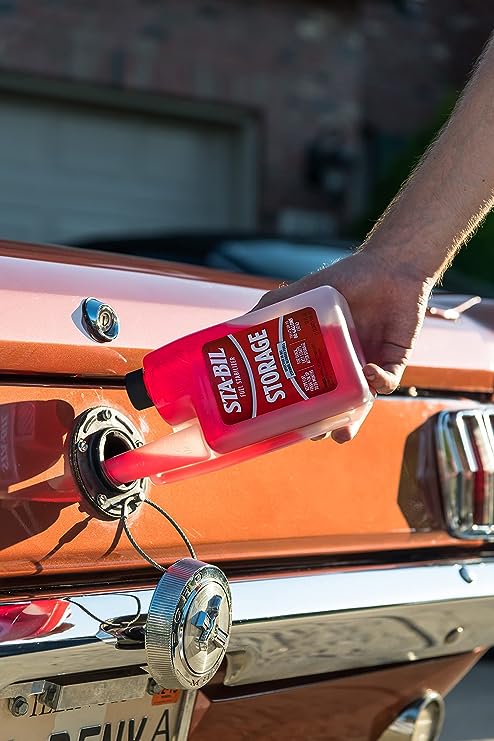
Gasoline degrades in storage, which is a problem for anything that sits idle: a generator between outages, a mower over winter, a collector car, a boat, or a can of gas kept in the garage. STA-BIL Storage is a gasoline additive that keeps fuel usable for up to 24 months and guards the fuel system against corrosion caused by ethanol and non-ethanol blends. It works across 87, 91, and 93 octane. The 32 fl. oz. bottle treats 80 gallons at a rate of 1 oz per 2.5 gallons, poured into the tank or can before fueling, then run through the engine for five minutes.
Note that the additive should go in while the fuel is still fresh, and an opened bottle stays good for two years.
When choosing a fuel stabilizer, it helps to know whether the product is rated for ethanol blends specifically, since many older formulas were designed for pure gasoline and may not adequately protect against the moisture absorption and phase separation that ethanol introduces. This one addresses both fuel types, which matters if your equipment may see varying pump blends across seasons. It is also worth confirming the treat rate before buying: a concentrate that handles 80 gallons from 32 ounces goes further than it might seem for a single small engine, making it a reasonable choice for someone managing several pieces of equipment or a household with a backup generator and seasonal power tools.
For storage, keep the bottle tightly sealed and away from direct sunlight or extreme heat, as with any petroleum-based product. If you are treating a fuel can rather than a tank, add the stabilizer first, then fill with fresh fuel so the incoming flow mixes it in without needing a separate stir. For longer-term equipment storage, running the engine after treating ensures the stabilized fuel circulates through the carburetor and fuel lines rather than sitting only in the tank.
Share