TP-Link
TP-Link Deco AX3000 WiFi 6 Mesh System(Deco X55) - Covers up to 6500 Sq.Ft. , Replaces Wireless Router and Extender, 3 Gigabit ports per unit, supports Ethernet Backhaul (3-pack)
TP-Link Deco AX3000 WiFi 6 Mesh System(Deco X55) - Covers up to 6500 Sq.Ft. , Replaces Wireless Router and Extender, 3 Gigabit ports per unit, supports Ethernet Backhaul (3-pack)
Couldn't load pickup availability
The TP-Link Deco X55 is a three-unit mesh WiFi 6 system that takes the place of a standalone wireless router and range extender. Rather than running one router and hoping the signal carries, the three identical units work together across a home, and any one of them can serve as the router. AI-driven mesh adjusts to the layout of the network it sits in. It suits households on internet plans of up to 1 Gbps.
- AX3000 dual-band speeds: 2402 Mbps (2x2 / HE160) plus 574 Mbps (2x2)
- Coverage for homes up to 6,500 square feet, with capacity for up to 150 connected devices
- Three Gigabit Ethernet ports on each unit, nine across the 3-pack, with wired Ethernet backhaul support
- Each unit measures 4.33 x 4.33 x 4.49 inches; 3.3 pounds total shipping weight
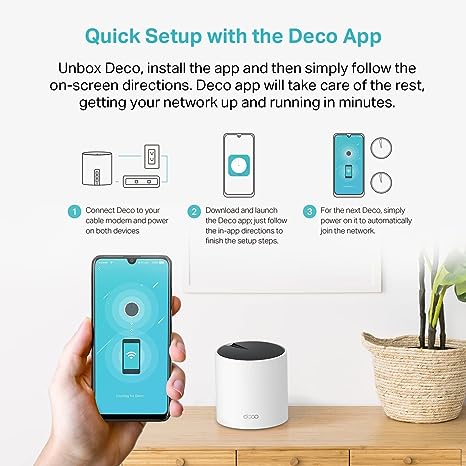
Setup is handled through the Deco app, which walks through adding each unit to the network and suggests placement based on signal strength between nodes. A good rule of thumb is to position each unit so it can see at least one other unit without a concrete wall or metal surface directly between them, which keeps the wireless backhaul connection stable. If a wired connection between units is practical, running an Ethernet cable from one Deco to another gives the backhaul a dedicated path and keeps the full wireless bandwidth free for devices.
This system suits renters or homeowners who want a single app to manage the whole network rather than logging into a router admin page. When comparing mesh systems of this kind, the number of Ethernet ports per node matters most to anyone who connects televisions, game consoles, or desktop computers by wire rather than WiFi. Three ports per unit is above average for a consumer mesh node, which gives more flexibility in rooms where several wired devices sit close together. The identical form factor across all three units also means any node can be swapped into any position without reconfiguring the network from scratch.
Share